Cascade Party
A new path in Washington State politics.
A new path in Washington State politics.
Elections & Voting
The SAVE Act adds complexity without building a stronger verification infrastructure.
By Damon Townsend (February 24, 2026)
In Washington and many other states, applicants already attest, under penalty of perjury, they are U.S. citizens when they register to vote. Providing false information is a crime.
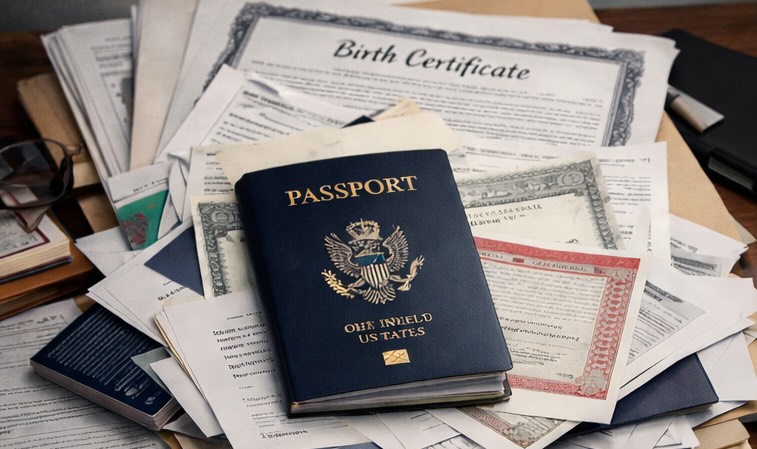
The SAVE America Act, which has passed the U.S. House of Representatives, would significantly change that framework for federal elections. SAVE requires voters who register by mail to submit documentary proof of citizenship. It would require absentee and mail ballot applicants to submit photocopies of identification both when applying for and when returning ballots.
There is a mandate for expanded voter list maintenance procedures, including required use of the federal SAVE database to identify potential noncitizens. The bill provides no federal funding to state administrators and includes no phase-in period.
Integrity
Only citizens should vote in federal elections. That is already federal law. The question is not whether citizenship matters: The question is whether SAVE builds a durable verification system or simply layers on new burdens.
The proposed SAVE database will be maintained by the Department of Homeland Security, and will be available, at no cost, to states. The current DHS system was designed to help agencies determine immigration status. It flags individuals who may not be citizens. It does not function as a definitive database confirming who is a citizen. It is a screening tool, not a universal citizenship registry.
That distinction matters.
Requiring states to query a system that identifies potential non-citizens does not provide affirmative proof that someone is a citizen. It generates investigative leads. It does not generate confirmation.
If Congress truly wants to clean voter rolls, it should build or designate a secure federal database that confirms citizenship status directly. A system election officials can validate against in real time.
Beasts of Burden
We need a system that answers this question clearly: Is this person a citizen? Yes or no?
Instead, the proposal punts the burden to the voter: Photocopy your documents, attach them to your ballot application, then attach them again when you return your ballot.
In an era when many households no longer own printers, this is not a trivial requirement. It assumes access to equipment, storage and time.
SAVE adds friction at the point of participation.
The bill will also generate real cost for local jurisdictions with new document intake procedures, expanded database queries and additional list maintenance reviews. These are potentially bifurcated election systems with separate rules for federal and state contests. All of this requires staffing, training, software adjustments, secure storage and legal review.
Yet Congress did not include funding.
Election administration is already complex and under-resourced. Unfunded mandates do not strengthen integrity. They strain the system.
There is also a philosophical inconsistency in this debate. Some of the loudest voices demanding extensive documentation from voters are skeptical of government data systems in other areas of life. They resist centralized authority — yet, here the solution is more paperwork, more copying, more 19th-century methods layered on top of 21st-century elections.
Is ERIC there?
We live in the 21st century. Let's use 21st-century solutions. The good news is we already have a state-run cooperative system in place.
For years, many states have used ERIC, the Electronic Registration Information Center, to compare voter registration data across states. ERIC is a nonprofit, nonpartisan membership organization created by and comprised of state election officials. This organization helps states identify voters who may have moved, died or registered elsewhere. It improves data accuracy through structured interstate comparison. ERIC is what modern list maintenance looks like.
What election officials actually need is straightforward: Confirmation that someone is alive, that someone is a citizen and that someone is not actively registered in another state.
States can check death records. ERIC helps discover any cross-state registrations. Citizenship confirmation remains the weakest link because the federal government has never built a clean, affirmative verification tool for that purpose.
Do not rely on photocopies and paper-based compliance in an era of secure digital verification.
Cascade Party believes in clean voter rolls and public confidence. We also believe in federal restraint and functional federalism. If Congress intervenes, it should add capability, not complexity.
Damon Townsend is a Cascade Party board Member, representing district 3/6. He has experience in government administration and lives in Gig Harbor.